Static HM
Neutral silicone adhesive with high elastic modulus for structural bonding of glass to frames
Neutral silicone adhesive with high elastic modulus for structural bonding of glass to frames

Rendering 1: bonding the bottom edge to the secondary seal
Rendering 2: bonding the lower edge of the glass
Rendering 3: bonding across the thickness of the glass

Discover more
Static HM is a neutral, single-component silicone sealant with a high modulus of elasticity, designed for bonding insulating glass – including laminated glass – to window frames made of painted aluminium, painted timber and PVC, and for securing the structure against weight and wind loads. It cures by reacting with moisture in the air, forming an elastic compound capable of adhering – even without a primer – not only to the frames but also to the secondary sealants (polysulphide, polyurethane and butyl) used in the manufacture of double-glazed units, without triggering any reaction of incompatibility, exudation or discolouration. It is, in fact, included in the lists of approved sealants by both IGK and Fenzi. Once cured, thanks to its high elongation coefficient, Static HMs compensates for mechanical shear stresses resulting from differential thermal expansion between the glass and the structure and ensures high stability and bond strength, even in the event of attempted break-ins. Resistance to ageing is guaranteed, thanks to its ultra-pure silicone chemical base: water, atmospheric agents and UV rays do not alter the adhesive/sealant in any way. Finally, thanks to its neutral nature, it is compatible with the PVB films used in laminated glass, does not emit any strong odours during application, and has been awarded EC1 Plus certification by the GEV body for its extremely low emissions of volatile organic compounds.
Cleaning: tools soiled with Static HM should be cleaned with organic solvents whilst the compound is still fresh (acetone, toluene). Once the sealant has cured, it can only be removed mechanically.
When kept in its original, unopened packaging and stored at temperatures between 15 °C and 25 °C in a dry environment (60% relative humidity), Static HM remains stable for at least 9 months. Stability is reduced, and the properties of Static HM may be altered, in the event of prolonged storage or transport at higher temperatures and humidity levels. Bags that have not been completely emptied can be stored for approximately 1 month, provided they are sealed tightly.
Bonding glass with Static HM can enable compliance with RC2 and RC3 standards, provided that appropriate mechanical restraints and fixings are also in place.
Given the wide variety of substrates and surface treatments available on the market, the operator must first check that Static HM—and any primer—are compatible with the installation requirements.
| Color | Code | Packaging | Packaging size | Pallet | Barcode |
|---|---|---|---|---|---|
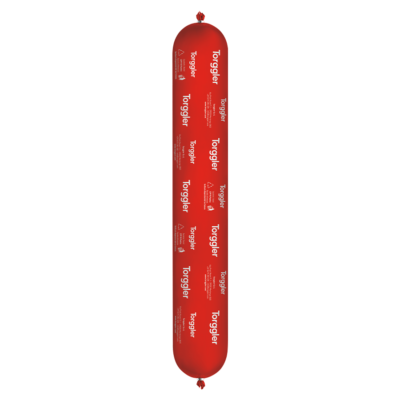
| Black | 5659 | foil bag | 20x600 ml |
36 cardboards
|

|
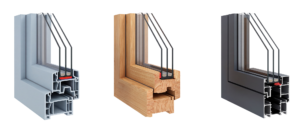
Rendering 1: bonding the bottom edge to the secondary seal
Rendering 2: bonding the lower edge of the glass
Rendering 3: bonding across the thickness of the glass
| Parameter | Test method | Value |
| Chemical base | Neutral alkoxy silicone | |
| Density | ISO 1183-1 | 1.39 g/ml |
| Application temperature | From +5 °C to +40 °C | |
| Surface curing time at 23 °C and 50 % RH | MIT 33 | 40–43 mins |
| Curing rate from the outside inwards at 23 °C and 50% RH | MIT 32 | 2.1 mm in 24 hours |
| Operating temperature | From -30 °C to +150 °C | |
| Surface hardness | ISO 868 | Shore A = 40 |
| Creep resistance | EN ISO 7390 | 0.0 mm |
| Elongation at break (Type 3 die) | ISO 37 | 475% |
| Tensile strength at break (Die Type 3) | ISO 37 | 3.03 N/mm² |
| Modulus of elasticity at 100% (Type 3 die-cut) | ISO 37 | 1.05 N/mm² |
| Acid resistance | Excellent | |
| Resistance to alkalis | Excellent | |
| Odour after cross-linking | None | |
| Reaction to fire according to | DIN 4102 | B1 – flame-retardant |
| VOC emissions | GEV Emicode | EC1 Plus – very low emissions |
| Storage | 9 months |
Contact our team for personalized support and product guidance.