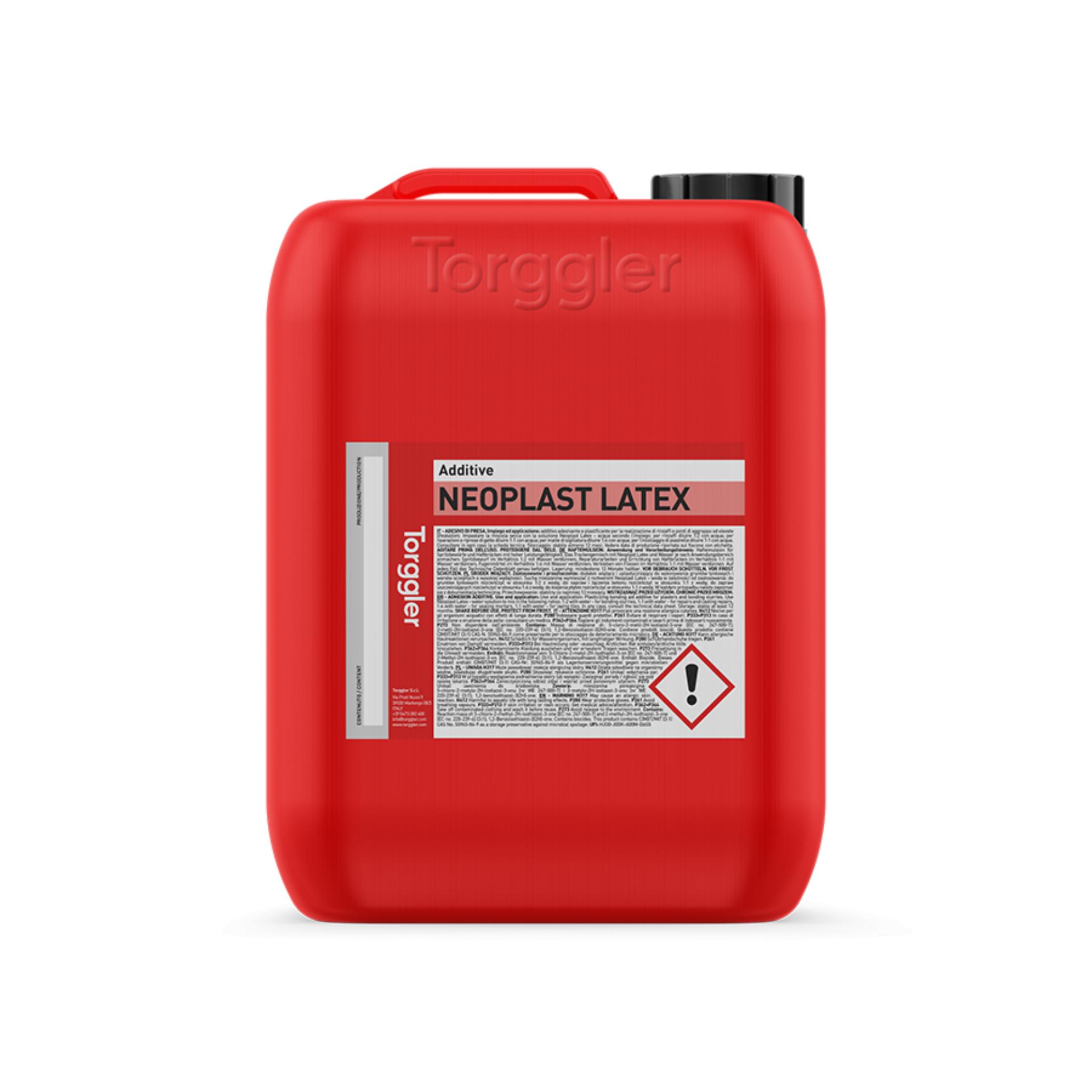
Neoplast Latex
An adhesive and plasticising additive for the production of screeds and bonding layers.
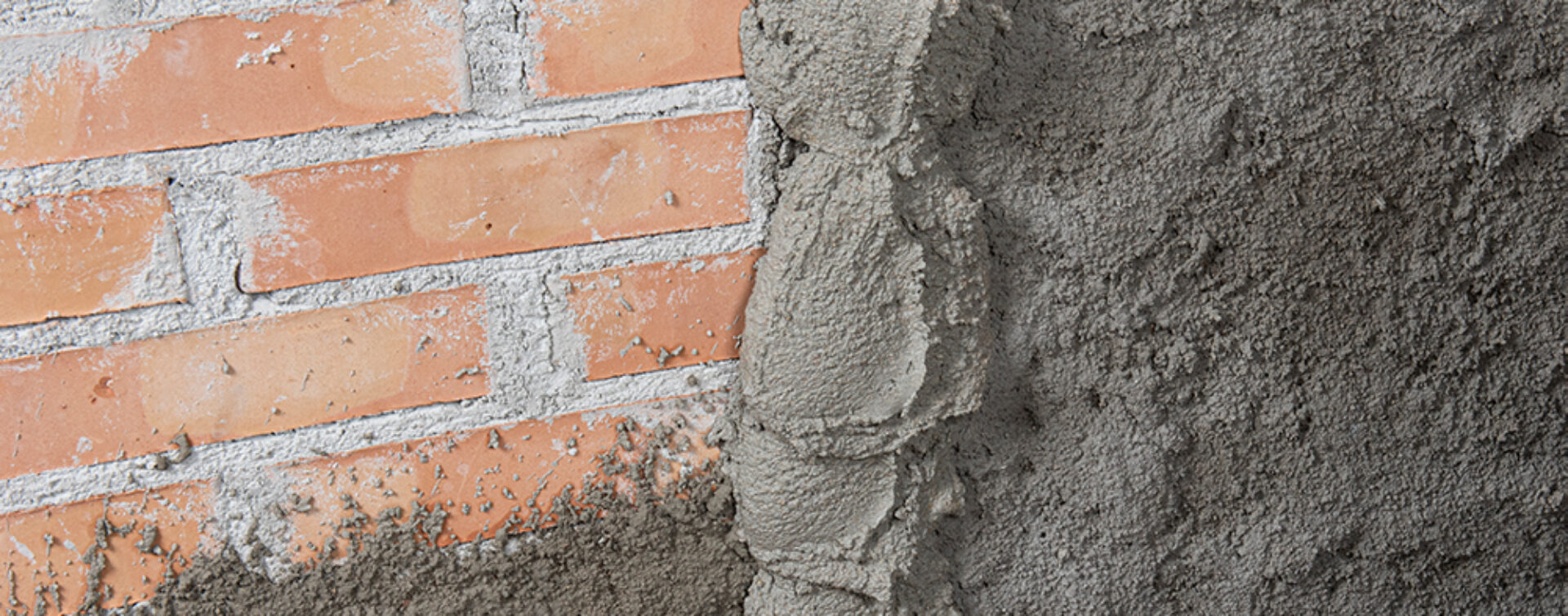
An adhesive and plasticising additive for the production of screeds and bonding layers.
Discover more
Neoplast Latex is a modifier for cements and hydraulic lime, based on specially formulated, very recently synthesised resins that are highly resistant to saponification and the effects of water, possess strong adhesive properties, and reduce the water-to-cement ratio whilst imparting excellent thixotropy to the mixture.
For all types of application, Neoplast Latex must first be diluted with water in the volume ratios required for the various applications. Only this solution should then be used to mix the dry mixtures of cement and aggregates – prepared separately – adjusting their consistency to suit the specific requirements of each application.
Neoplast Latex must be stirred until completely homogeneous before use. Mortars modified with Neoplast Latex must not be applied at temperatures below +5 °C. Plaster, repairs, coatings, etc. must be kept damp for a few days. In all applications using Neoplast Latex, the preparation of the substrate must be carried out with the utmost care. It must be clean, sound, free from all traces of oils, greases, residues of release agents, anti-evaporation agents or paints, and suitably primed. Loose particles and cement crusts must be thoroughly removed. The substrate must also be pre-wetted until completely saturated. In all the applications described below, the general rules for the proper composition and application of mortars and concrete must be strictly observed:
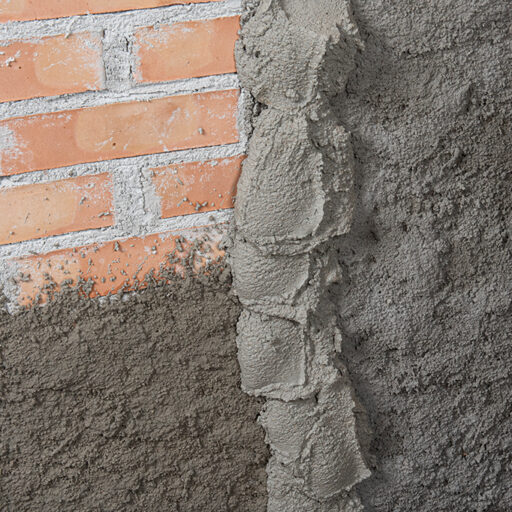
For the base coat of plaster (rough coat):
For repairs, filling and re-casting:
In sealing mortars:
As it is extremely important in this case that the sealing mortar exhibits the lowest possible shrinkage, a homogeneous but very stiff mortar must be prepared.
Mortar composition: 1 part by volume of cement:
3 parts by volume of sand (the grain size will depend on the dimensions of the joint, crack, cavity, etc. to be sealed).
Mixing solution:
1 part by volume of Neoplast Latex
4 parts by volume of water
For tile bonding:
By using Neoplast Latex in combination with a powdered adhesive, a waterproof, highly adhesive bonding bed with good chemical resistance is obtained (for swimming pools, industrial flooring and wall cladding, etc.).
The mixture must be applied generously to create a continuous and therefore waterproof adhesive bed. In the case of particularly demanding applications such as swimming pools, drinking water tanks, etc., and tiles with a highly profiled underside, it is essential to apply the adhesive to the back of the tile as well to avoid voids.
Neoplast Latex must be protected from frost. When kept in its original, unopened packaging, it remains stable for at least 12 months.
| Code | Packaging | Packaging size | Pallet | Barcode |
|---|---|---|---|---|
| 6097 | bottle | 20x0,8kg |
24 cardboards
|

|
| 6098 | canister | 6kg |
128 canisters
|

|
| 6099 | canister | 10kg |
60 canisters
|

|
| 6100 * | canister | 25kg |
28 canisters
|

|
Neoplast Latex is used:
| Density (as per UNI 9055) | 1.013 kg/l |
| Dry residue (as per UNI 8490/1) | 35% |
| pH (as per UNI 8490/4) | 6.6 |
| Viscosity | approx. 35 cP |
| Saponification number (as per UNI 9530) | 4 |
| Chloride content (as per UNI 7119) | none |
| Residue on 0.040 mm mesh (UNI 2331) (in accordance with UNI 9531) | no residue |
| Compressive strength at 28 days (in accordance with DIN 1164) | approx. 45.0 N/mm² |
| Flexural strength at 28 days (in accordance with DIN 1164) | 12 N/mm² |
| Tear strength (according to UNI 9532) | > 3 N/mm² (break in the sample) |
| Shrinkage (according to DIN 52450) | approx. 0.1 mm/m |
| Water absorption (as per DIN 4110) | approx. 2% |
| Abrasion resistance (according to EBENER) | 90 g |
N.B.: The cement specimens are based on standard mortar containing Neoplast Latex and were prepared using 230 g of a solution consisting of 1 part by volume of Neoplast Latex and 3 parts by volume of water, equivalent to a dosage of 12.8% Neoplast Latex by weight of cement (425 ptl).
N.B.: The cement samples are based on standard mortar containing Neoplast Latex and were prepared using 230 g of a solution consisting of 1 part by volume of Neoplast Latex and 3 parts by volume of water, equivalent to a dosage of 12.8 per cent Neoplast Latex by weight of cement (425 ptl).
100 to 200 g of Neoplast Latex per kg of cement used.
Contact our team for personalized support and product guidance.