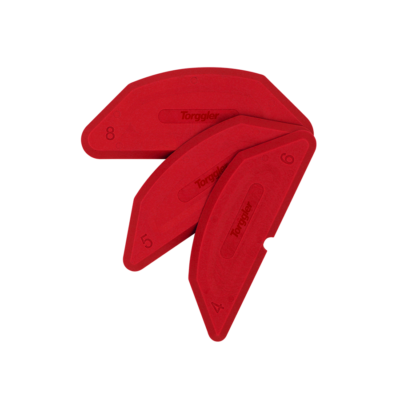
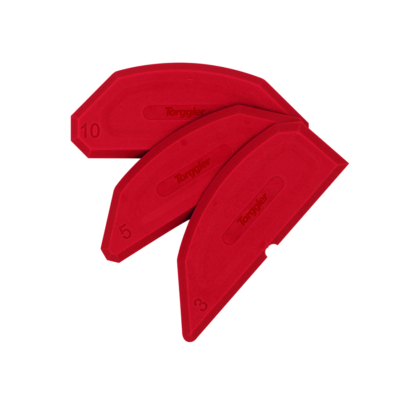
Acetic Standard
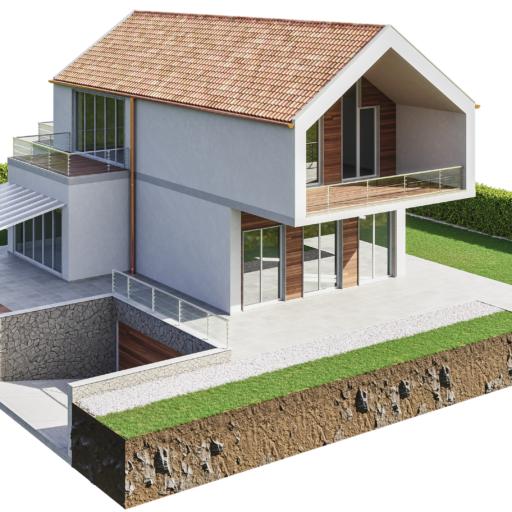
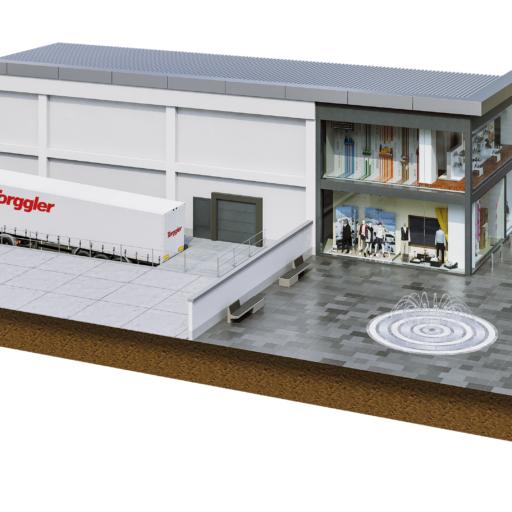
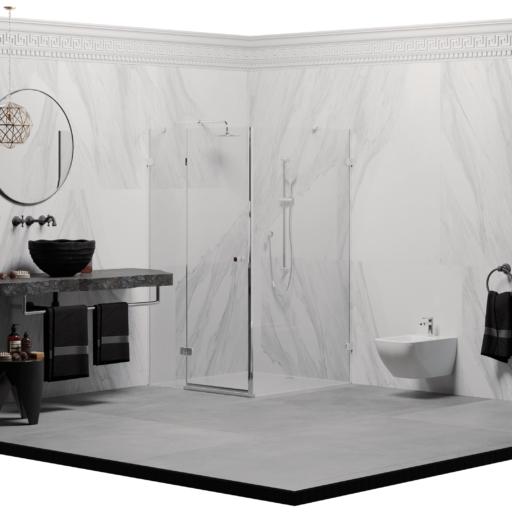
Acetic silicone sealant, mould-resistant, for use on façades and glazing, indoors and outdoors, and in sanitary applications. Ideal for ceramic tiles.


Acetic silicone sealant, mould-resistant, for use on façades and glazing, indoors and outdoors, and in sanitary applications. Ideal for ceramic tiles.
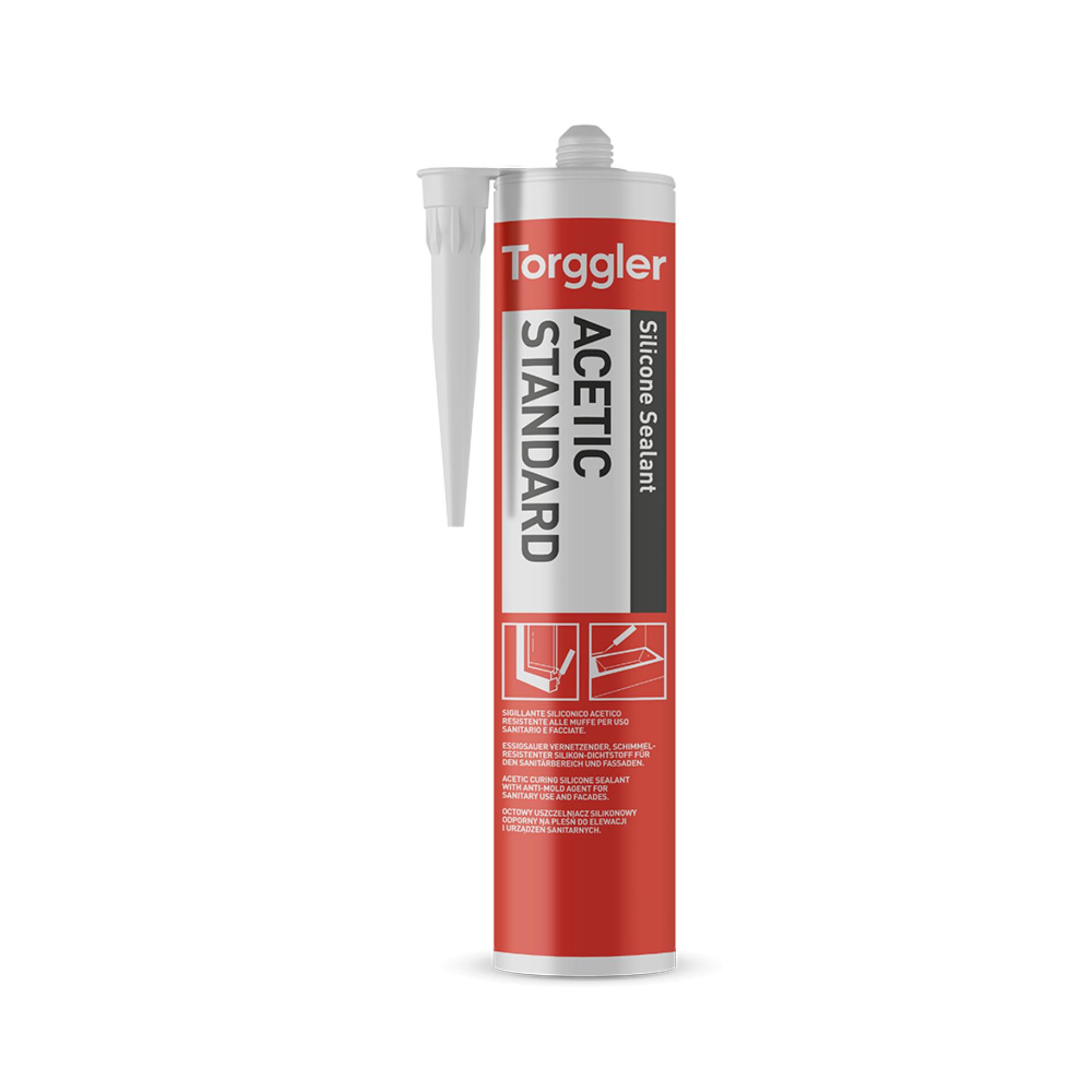


Variations
Application areas
Discover more
Acetic Standard Silicone is an acetic-curing silicone sealant whose formulation allows it to be used on most substrates commonly found in the construction industry. It cures very quickly and offers exceptional resistance to UV rays and weathering. The inclusion of an antimicrobial and anti-algal agent in the formulation also makes it suitable for healthcare environments: the product withstands boiling water and cleaning with chemically aggressive detergents, thereby contributing to surface hygiene. Its excellent adhesive properties, high elasticity and resistance to very low operating temperatures mean it can also be used outdoors, ensuring consistent performance over time. It adheres extremely well even without a primer on glass, porcelain or glazed surfaces, and adheres well to most smooth substrates. For other types of substrate (porous, metallic, painted), it is advisable to carry out preliminary tests or to use the Silicone Primer.
Acetic Standard Silicone is classified as a non-structural sealant for façades (type F-EXT/INT-CC) in accordance with EN 15651-1, for glazing (type G-CC) in accordance with EN 15651-2 and for sanitary applications (type XS) in accordance with EN 15651-3.
Cleaning of tools
Whilst the sealant is still in its plastic state, use solvents; once hardened, clean only mechanically.
Acetic Standard Silicone must be stored in a cool, dry place. Under these conditions, it has a shelf life of at least 24 months. Partially used cartridges can be stored for approximately 3 months if kept tightly sealed.
| Color | Code | Packaging | Packaging size | Pallet | Barcode |
|---|---|---|---|---|---|
| Transparent | 8001 | cartridge | 24x280 ml |
60 cardboards
|

|
| White 9010 | 8003 | cartridge | 24x280 ml |
60 cardboards
|

|
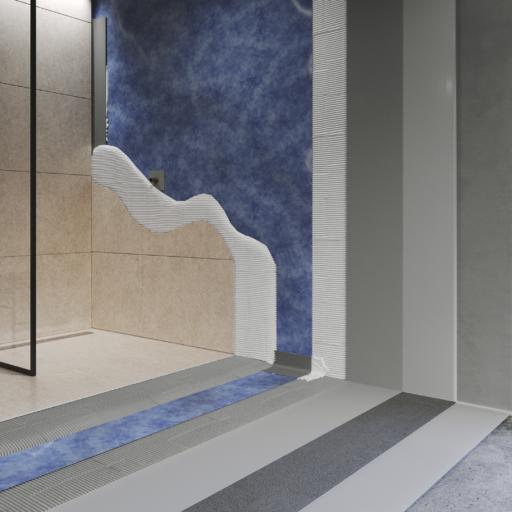
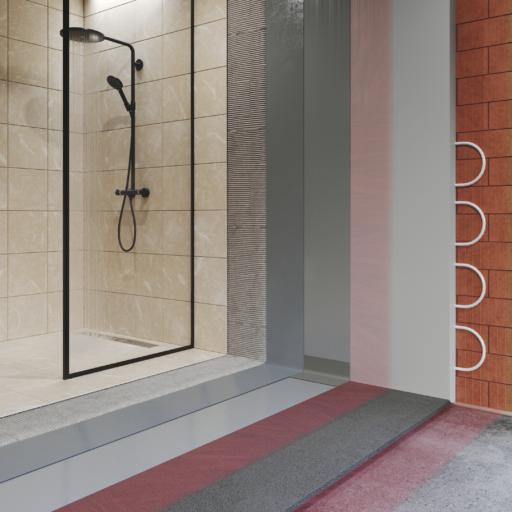
Its high adhesion, mould resistance, low modulus of elasticity but, above all, the availability of a colour range that matches the Tile Grout range of cementitious grouts, make it the ideal product for creating expansion joints on ceramic surfaces, even in damp areas (connections with baths, sinks, etc.). Its rapid setting also allows for the static bonding of glass and ceramic elements, glass-block, profiled glass, artistic objects and solar collectors. It is suitable for sealing window/wall and glass/window connections. It is also used in domestic appliances.
| PARAMETER AND TEST METHOD |
VALUE | VALUE |
| Version | Clear, White, Black | Coloured |
| Density (ISO 1183-1) | 0.98 g/ml | 1.01 g/ml |
| Application temperature | from +5 °C to +40 °C | from +5 °C to +40 °C |
| Surface curing time (MIT 33*) | approx. 25 minutes | approx. 25 minutes |
| Curing rate from the outside inwards at 23 °C (MIT 32*) | approx. 1.7 mm / 24 h | approx. 2.0 mm / 24 h |
| Operating temperature | from -40 °C to +150 °C | from -40 °C to +150 °C |
| Surface hardness (ISO 868) | 18 | 18 |
| Volume change (UNI EN ISO 10563) | 15 % | 7 % |
| Elongation at break (DIN 53504 – S3 die) | 500 % | 700 % |
| Tensile breaking load (DIN 53504 – S3 die) | 1.0 N/mm² | 1.1 N/mm² |
| Modulus of elasticity at 100% (DIN 53504 – S3 die) | 0.33 N/mm² | 0.32 N/mm² |
| Elongation at break (UNI EN ISO 8339/A – Glass substrate – G, Al) | 150 % | 250 % |
| Tensile breaking load (UNI EN ISO 8339/A – Glass substrate – G, Al) | 0.60 N/mm² | 0.70 N/mm² |
| Modulus of elasticity at 100 per cent (UNI EN ISO 8339/A – Glass support – G, Al) | 0.36 N/mm² | 0.38 N/mm² |
| Elastic recovery (UNI EN ISO 7389/B – Glass substrate – G, Al) | > 95% | > 95% |
| Maximum working elongation (ISO 11600) | 12.5% (F); 20 (G) | 25 % |
| Acid resistance | excellent | excellent |
| Resistance to alkalis | excellent | excellent |
| Odour after cross-linking | none | none |
| GEV EMICODE | EC1 | EC1 Plus |
| INDICATIVE CONSUMPTION TABLE | ||
| Joint width x depth (mm) | Consumption per linear metre | Linear metres produced with one cartridge |
| 6×6 | 36 ml | 7.78 |
| 8×8 | 64 ml | 4.34 |
| 10×10 | 100 ml | 2.8 |
| 15×10 | 150 ml | 1.87 |
| 20×10 | 200 ml | 1.4 |
Contact our team for personalized support and product guidance.