Acryl Fire Resistant
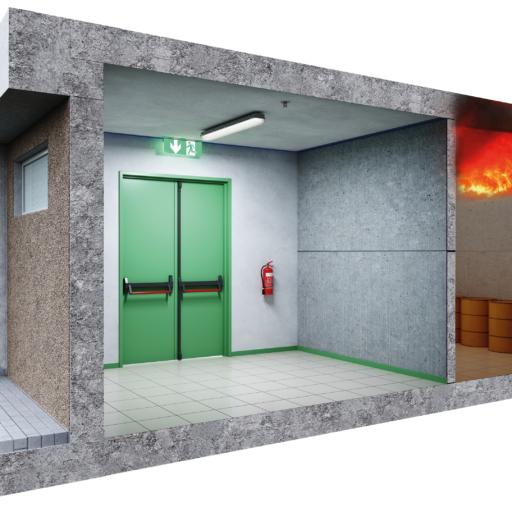
Acrylic sealant for applications subject to fire safety regulations up to EI 240.

Acrylic sealant for applications subject to fire safety regulations up to EI 240.



Variations
Application areas
Discover more
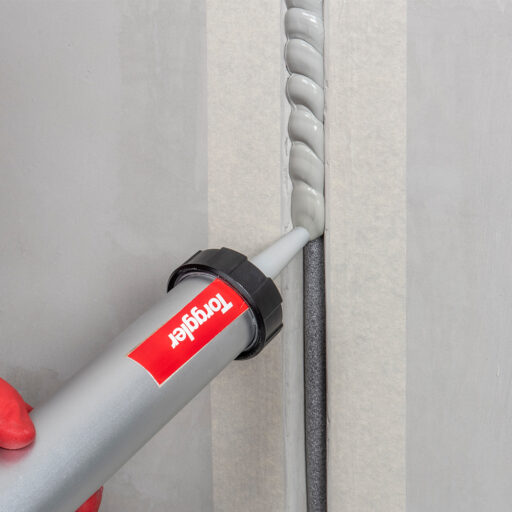
Acryl Fire Resistant is a single-component acrylic sealant based on acrylic polymers in an aqueous dispersion and selected mineral fillers, which give the cured material high fire resistance in the event of a fire. It cures through the evaporation of water, forming a plastically elastic mass with excellent resistance to ageing. Acryl Fire Resistant adheres even to damp surfaces, does not run and can be easily smoothed. It can be applied both indoors and outdoors, although in the latter case it must be ensured that there is no continuous contact with water. Acryl Fire Resistant can be overpainted with water-based paints and varnishes. The product is certified as EC 1 Plus by the GEV body in terms of very low emissions of volatile organic compounds.
Joint dimensioning: Certified joints must conform to the geometry specified in the product’s official classification reports.
Cleaning
Tools soiled with ‘Acryl Fire Resistant’ should be cleaned with water whilst the compound is still fresh. If the sealant has hardened, it can only be removed mechanically or using organic solvents (acetone, toluene).
It is sensitive to frost. When kept in its original, unopened packaging and stored at temperatures between 5 °C and 35 °C, Acryl Fire Resistant remains stable for at least 24 months. Bags that have not been completely emptied can be stored for approximately 3 months, provided they are sealed properly.
The material cures through the evaporation of water: the sealant loses its initial stickiness within 20–120 minutes, depending on environmental conditions. Low temperatures and/or high relative humidity slow down this process, whilst high temperatures and/or low relative humidity speed it up. Do not apply Acryl Fire Resistant, if rain is imminent: the applied sealant, which has not yet formed a film, may be washed away. Sealant that has not fully cured is damaged by frost.
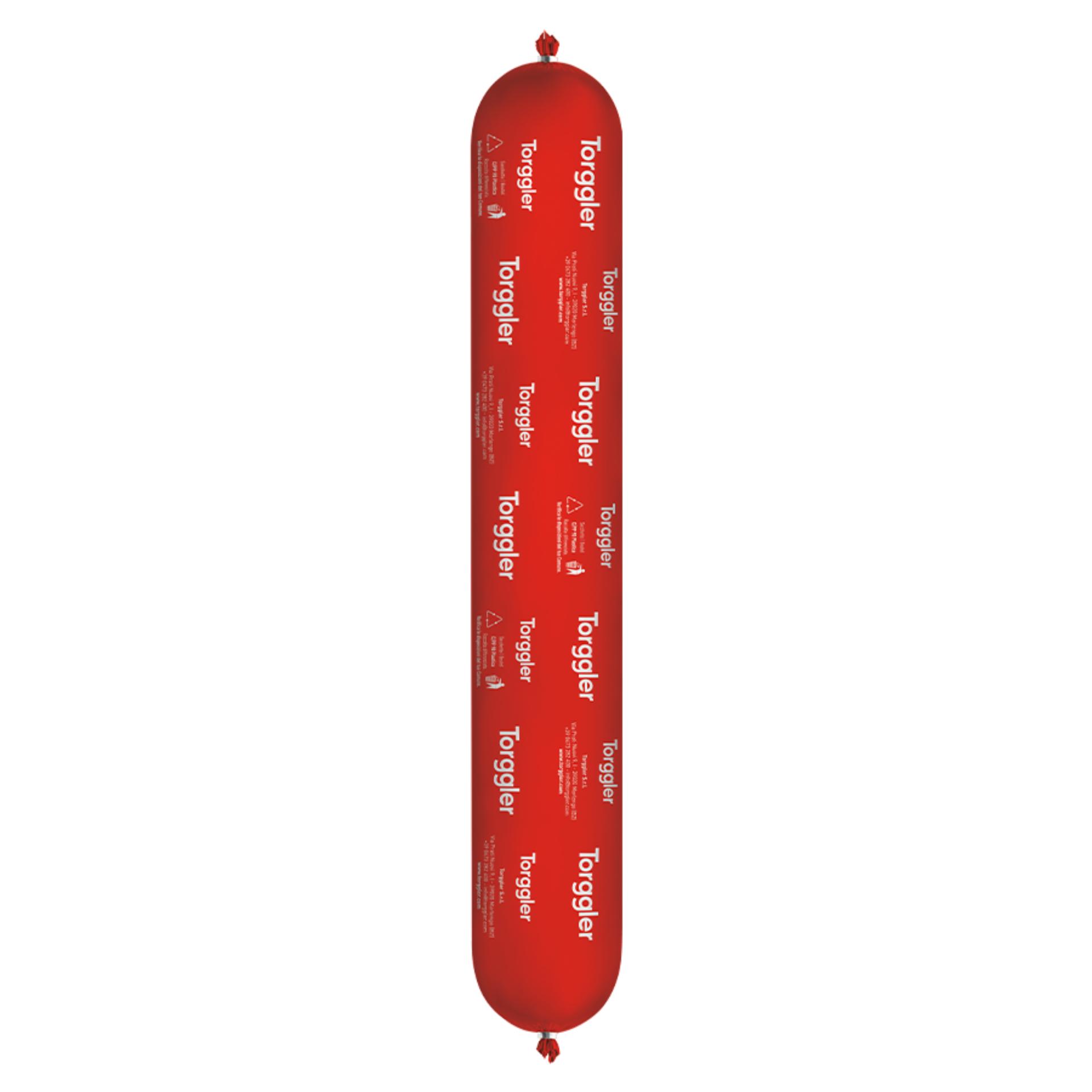
| Color | Code | Packaging | Packaging size | Pallet | Barcode |
|---|---|---|---|---|---|
| White | 5515 | foil bag | 20x600 ml |
36 cardboards
|

|
| Grey | 5516 | foil bag | 20x600 ml |
36 cardboards
|

|
| TESTS ON THE CURED PRODUCT | VALUE |
| Colour | 100 white and 230 grey |
| Density (UNI 8490/2) | 1.70 g/ml |
| Application temperature | from +5 °C to +30 °C |
| Surface curing time (MIT 45*) | approx. 30 minutes |
| Full cure (at 23 °C and 50 per cent relative humidity) | Approx. 10 days (for a 10×10 mm joint) |
| Creep tendency (EN ISO 7390) | < 3 mm (does not run) |
| Operating temperature | from -25 °C to +85 °C |
| Shore A hardness (EN ISO 868) Shore A/max | approx. 50 |
| Shore A hardness (EN ISO 868) Shore A/15 | approx. 10 |
| Elongation at break (DIN 53504 – S3 dies) | Approx. 700% |
| Tensile breaking load (DIN 53504 – S3 dies) | 0.20 MPa |
| Modulus of elasticity at 100% (DIN 53504 – S3 dies) | 0.27 MPa |
| Percentage elongation at break (EN ISO 8339) concrete substrate | approx. 200% |
| Modulus of elasticity at 100% elongation (EN ISO 8339) on a concrete substrate | 0.1 MPa |
| Tensile strength at break (EN ISO 8339) on concrete substrate | 0.1 MPa |
| Maximum service elongation | 10% |
| Volume change (EN ISO 10563) | approx. 23% |
| Paintability | once cured, the compound can be overcoated with water-based paints |
| Fire resistance classes (EN 13501-2) | E (integrity): 240 for all tested geometries. EI (integrity and insulation): 240 for all symmetrical geometries; from 60 to 240 for asymmetrical geometries (see test report CSI1472FR) |
| Fire reaction class (EN 13501-1) | B-s1, d0 |
* Torggler’s in-house methods are available on request.
| INDICATIVE CONSUMPTION TABLE | ||
| JOINT WIDTH X DEPTH (MM) | CONSUMPTION PER LINEAR METRE | LINEAR METRES COVERED BY ONE 550 ML BAG |
| 10×10 | 100 ml | 6 |
| 20×10 | 200 ml | 3 |
| 30×20 | 600 ml | 1 |
| 40×20 | 800 ml | 0.75 |
Contact our team for personalized support and product guidance.