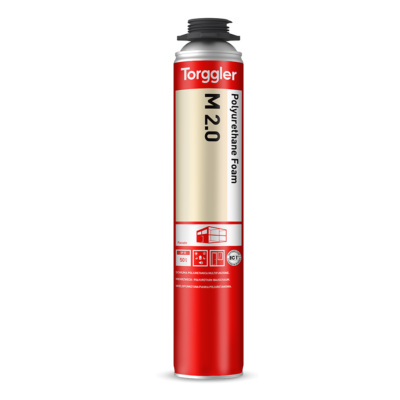
F 2.0
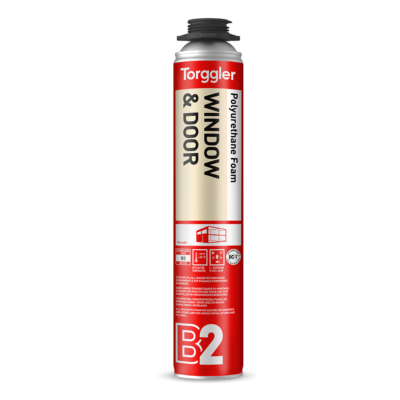
Flexible polyurethane foam for the professional installation of windows and doors.


When fitting windows and doors, sealing of the primary joint (between the wall and the sub-frame) and the secondary joint (between the sub-frame and the fixed frame) in accordance with UNI 11673-1.
Flexible filling of joints of all types and in any orientation, both internally and externally, between building elements made of: concrete, masonry, bricks, stone, mortar, plaster, plasterboard, fibre cement, timber, metal, glass, EPS and XPS panels, plastics, etc. Ceiling infill in internal partitions and sealing of service penetrations in walls or floors, where a high degree of flexibility is required in the infill material.
Application areas
Discover more
Flexible polyurethane foam for the installation of windows, doors and sub-frames; it absorbs vibrations and structural movement, compensating for the thermal expansion of the supporting structures, prevents heat loss, water ingress and ensures thermal and acoustic insulation at the installation joints of doors and windows. It retains its properties and performance even at extreme temperatures, provided it is protected from UV rays.
The sides of the joint must be solid, clean, degreased and consistent. To improve adhesion and obtain a uniform and homogeneous foam structure, slightly moisten the substrates. Screw the gun to the ring nut and shake vigorously for a long time to obtain a good mixing of the components. For faster extrusion, shake the can even during the laying intervals. Turn the cylinder upside down and fill the cavities by half volume: the post-expansion will fill the remaining vacuum. In case of low ambient humidity, or to increase the curing speed of F 2.0, moisten the foam after extrusion. In case of cavities deeper than 4 cm, fill in layers and wait 15-30 minutes between applications and humidify before continuing. After complete hardening, cut the excess and protect from UV rays: F 2.0 can be sanded, plastered and painted.
Store upright in a dry place, away from low temperatures, heat and direct sunlight. For effective foam extrusion, a temperature of between +15 and +25 °C is recommended. It will keep for at least 12 months in its original packaging.
The F 2.0 canister is a pressurised container. Protect from direct sunlight and do not expose to temperatures exceeding 50 °C. Do not pierce or burn, even after use. Do not spray onto a flame or any incandescent object. Extremely flammable: keep away from all sources of ignition. No smoking. There is a particular risk of explosive air/gas mixtures forming when several cylinders are used in the same area. Keep out of the reach of children. Contains 4,4'-diphenylmethane diisocyanate (EEC No. 615-005-00-9). Use of this product may cause allergic reactions in individuals already sensitised to diisocyanates. People suffering from asthma, eczema or skin problems should avoid contact, including skin contact. Use only in a well-ventilated area. Harmful if inhaled: do not breathe in aerosols. In the event of inadequate ventilation, wear a protective mask fitted with a suitable gas filter (e.g. type A1 in accordance with standard EN 14387). Irritating to the eyes, respiratory tract and skin. May cause sensitisation by inhalation and skin contact. In case of contact with the eyes, rinse immediately and thoroughly with water and seek medical advice. In case of skin contact, wash immediately and thoroughly with soap and water. Wear suitable protective clothing and gloves. In the event of an accident or if you feel unwell, seek medical advice immediately (if possible, show the label to the doctor).
| Color | Code | Application | Packaging | Packaging size | Pallet | Barcode |
|---|---|---|---|---|---|---|
| White | 8046 | Gun application | can | 12x750 ml |
70 cardboards
|

|
When fitting windows and doors, sealing of the primary joint (between the wall and the sub-frame) and the secondary joint (between the sub-frame and the fixed frame) in accordance with UNI 11673-1.
Flexible filling of joints of all types and in any orientation, both internally and externally, between building elements made of: concrete, masonry, bricks, stone, mortar, plaster, plasterboard, fibre cement, timber, metal, glass, EPS and XPS panels, plastics, etc. Ceiling infill in internal partitions and sealing of service penetrations in walls or floors, where a high degree of flexibility is required in the infill material.
| PARAMETER AND TEST METHOD | VALUE |
| Colour | White |
| External temperature during application | +5/+35 °C |
| Operating temperature | -40/+90 °C |
| Surface film formation (at 23 °C and 50% RH) (MIT 101) | 6–10 minutes |
| Cord cut-off time (Ø 20 mm at 23 °C and 50% RH) (MIT 101) | 20–40 minutes |
| Density | 20–25 g/l |
| Volume loss (shrinkage) (FETICA TM 1004) | <5% |
| Post-expansion bead (MIT 101) | |
| Approximate yield | 35–40 litres |
| Fire behaviour (DIN 4102) | B3 |
| Closed-cell | ± 70% |
| Water resistance | excellent |
| Resistance to detergents | Excellent |
| Chemical resistance | Good |
| UV resistance | poor |
| Resistance to microorganisms | excellent |
Contact our team for personalized support and product guidance.