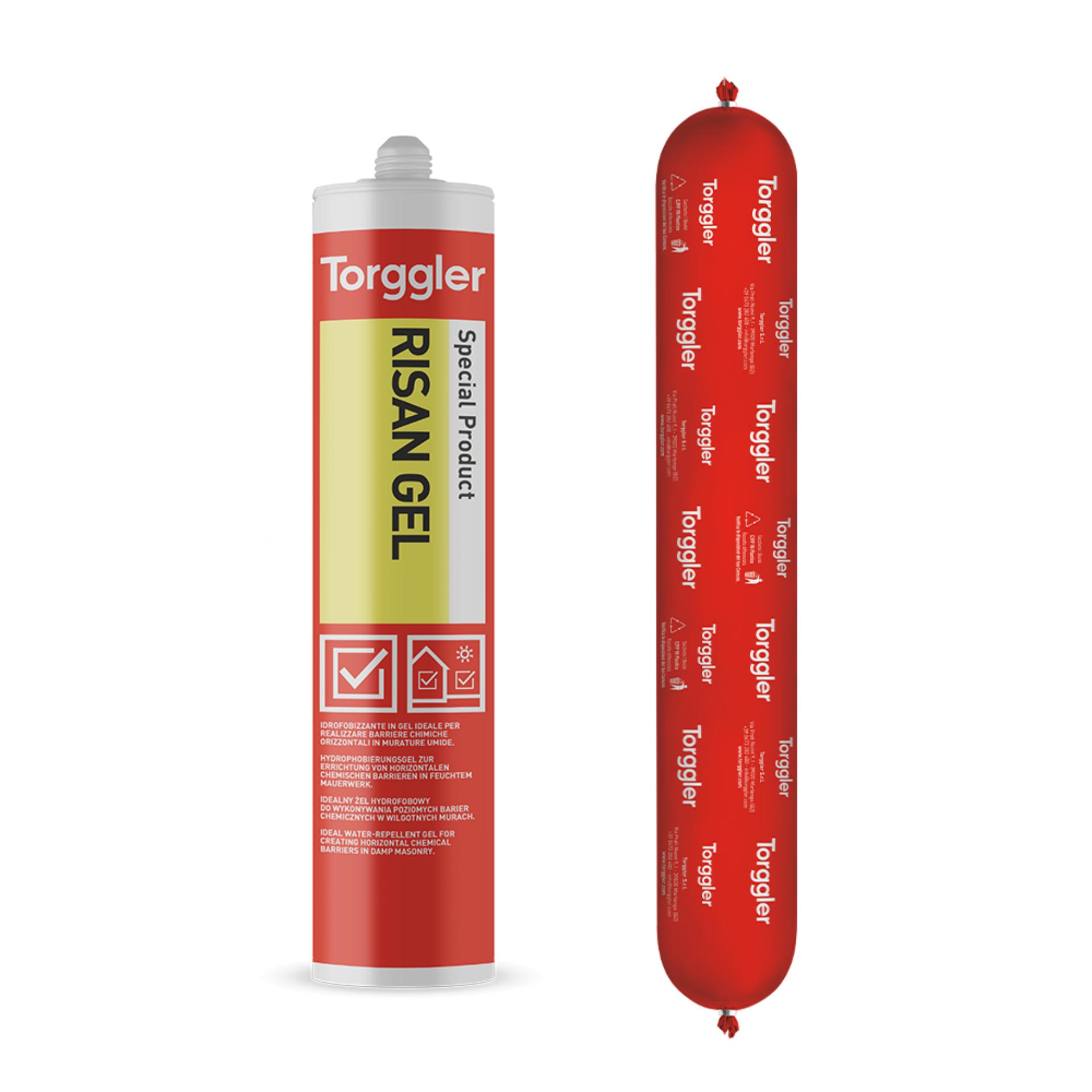
Risan Gel
A monomeric silane-based water-repellent gel for creating chemical barriers against rising damp in masonry.
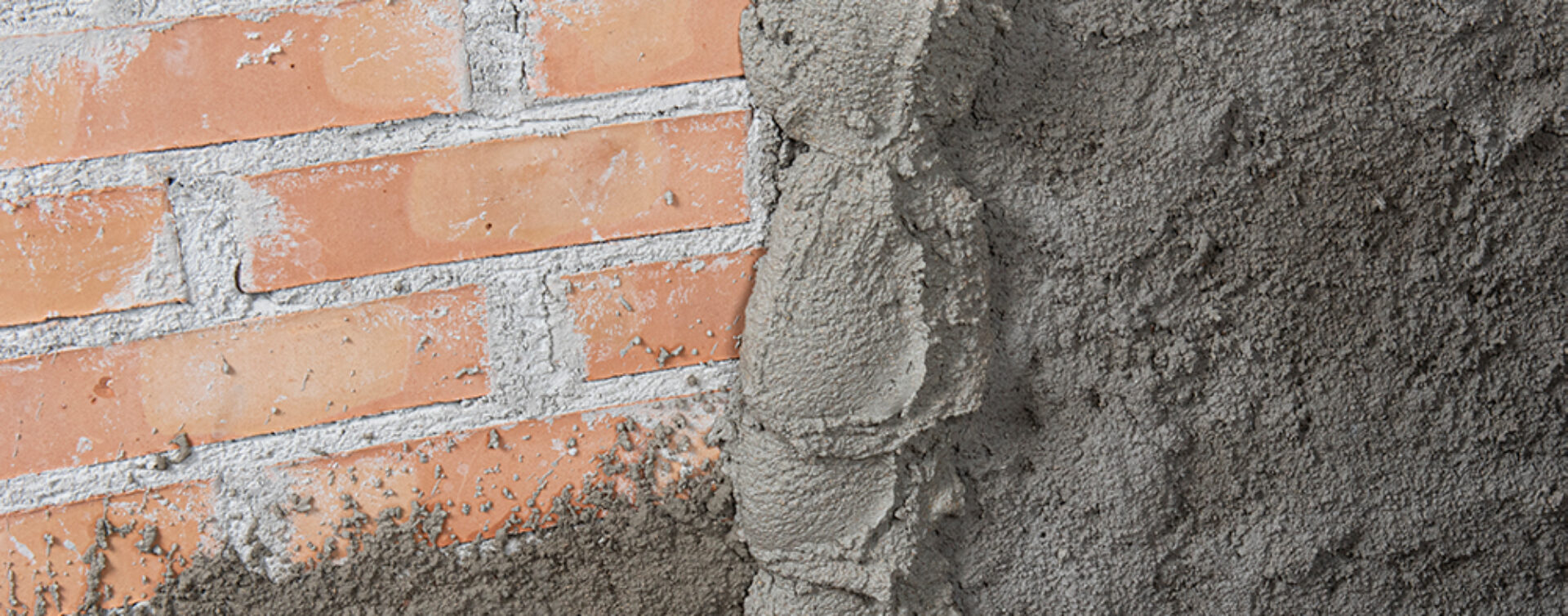
A monomeric silane-based water-repellent gel for creating chemical barriers against rising damp in masonry.
Risan Gel It has been designed to create chemical barriers against rising damp on any type of masonry (concrete, brick, tuff, stone or mixed) in a very simple, quick and safe manner.
Risan Gel’s consistency makes it easy to calculate the quantity required for any type of job (and therefore the associated cost) and greatly simplifies the work.
Discover more
Risan Gel It is a gel-based water-repellent treatment made from silane monomer, ideal for creating chemical barriers against rising damp in masonry. Its gel consistency and the absence of solvents make the application of ‘Risan Gel’ extremely easy, permanent and safe, with a very low environmental impact. The active ingredients in ‘Risan Gel’ penetrate deep into the masonry, react with the silica present within it and begin to form a water-repellent barrier that expands, blocking the rise of water without compromising the breathability of the masonry.
Preparation for installation
Mechanically remove any deteriorated plaster to a height of 70–80 cm above the salt line. If the masonry is uneven and lacks cohesion, first fill any internal voids by injecting suitable super-fluid grout compatible with the existing materials.
Drilling the holes
On the first mortar joint visible from the internal floor level, taking care not to go more than 7–8 cm from the floor, drill 12 mm holes at 10 cm centres. The holes must be drilled along the entire length of the masonry affected by the damp problem, starting, where possible, 50 cm before and 50 cm after the identified area. The hole must be the depth of the wall minus 5 cm (therefore, for 20 cm thick masonry, the depth will be 15 cm). Once drilling is complete, clean the holes with compressed air to remove any drilling residue.
Installation instructions
Inject ‘Risan Gel’ until the holes are completely filled from the bottom, gradually withdrawing the tube as ‘Risan Gel’ is extruded, leaving at least 2 cm to subsequently seal the holes with one of the mortars from the Torggler dehumidifying range (Intonaco WTA, Risan One, or Risan Spritz). For application from 280 ml cartridges, a standard ‘silicone gun’ should be used; for 600 ml sachets, a ‘600 ml sachet gun’ such as our Combi Manual Gun should be used.
Re-plastering
Once at least 7 days have elapsed since the injections were completed, proceed with the appropriate plastering, if required.
For masonry affected by significant rising damp and high concentrations of soluble salts, we recommend applying a macroporous, dehumidifying plaster, to be chosen from the Intonaco WTA, Risan One or Risan Spritz (in accordance with their respective technical data sheets), in order to intercept any moisture not blocked by the chemical barrier.
Risan Gel It retains its properties for at least 12 months if stored in intact, sealed original packaging, in a cool, dry place away from direct sunlight, at a temperature between +5 °C and +30 °C. Partially used cartridges can be stored for approximately 24 hours if kept tightly closed.
| Color | Code | Packaging | Packaging size | Barcode |
|---|---|---|---|---|
| White | 8530 | cartridge | 12x280 ml |

|
| White | 8531 | foil bag | 12x600 ml |

|
Risan Gel It has been designed to create chemical barriers against rising damp on any type of masonry (concrete, brick, tuff, stone or mixed) in a very simple, quick and safe manner.
Risan Gel’s consistency makes it easy to calculate the quantity required for any type of job (and therefore the associated cost) and greatly simplifies the work.
| Parameter | Value |
| Aspect | Gel |
| Colour | White |
| Specific gravity | 0.97 kg/l |
| pH | 7–8 |
| Mixing | Ready to use |
| Application temperature | Between +5 °C and +35 °C |
| Packaging 600 ml | 12 sachets + 2 injection tubes + 4 sealed nozzles |
| Packaging 280 ml | 12 cartridges + 4 injection tubes + 4 sealed nozzles |
Consumption depends on the type of masonry and its thickness. Below is an indicative guide to the number of cartridges required to cover one linear metre of work, depending on the type of masonry and its thickness. For special types of masonry or masonry thicker than 50 cm, please contact our technical department.
| Masonry thickness | 20 cm | 25 cm | 30 cm | 35 cm | 40 cm | 45 cm | 50 cm | |
| Type of masonry | ||||||||
| Solid bricks, tuff, concrete |
Cartridges ml
|
0.8
224 |
1.0
280 |
1.3
364 |
1.5
420 |
1.8
504 |
2.0
560 |
2.3
644 |
| Mixed stone and brick | Cartridges
ml |
1.0
280 |
1.2
336 |
1.6
348 |
1.8
504 |
2.2
616 |
2.4
672 |
2.8
784 |
| Stone | Cartridges
ml |
1.1
280 |
1.3
364 |
1.8
504 |
2.0
560 |
2.4
672 |
2.7
756 |
1.0
868 |
Contact our team for personalized support and product guidance.