Aquaproof
Fine-grained osmosis-resistant cementitious mortar, Type C in accordance with EN 1504-2, based on the MC–IR principles, for the waterproofing of cementitious substrates against positive and negative hydrostatic pressure.


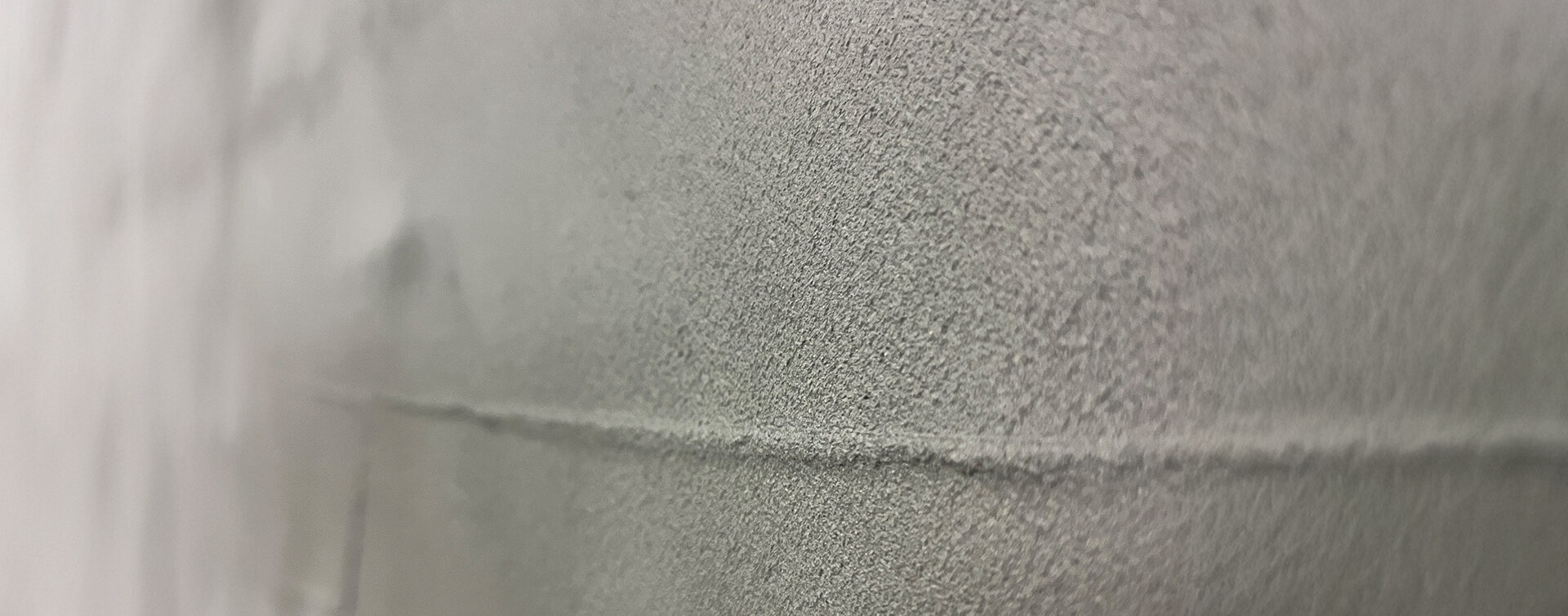
Fine-grained osmosis-resistant cementitious mortar, Type C in accordance with EN 1504-2, based on the MC–IR principles, for the waterproofing of cementitious substrates against positive and negative hydrostatic pressure.


Application areas
Discover more
Aquaproof It is a ready-to-use, grey, single-component cementitious mortar, based on high-strength cements, selected fine-grained aggregates, special synthetic resins and organic additives, classified as type C in accordance with EN 1504-2 for the MC – IR principles. Its specially formulated composition ensures waterproofing performance even at thin thicknesses, exceptional workability and ease of application across a wide range of application methods (trowel, brush, roller, broom, spray), excellent adhesion to the substrate, superb water retention, and deep-penetrating sealing of the substrate’s capillary channels via osmotic penetration.
Preparation for installation
Substrates must be non-bleeding, solid and even, yet sufficiently roughened; they must be thoroughly clean, free from oil and grease, dust, loose material and general dirt, and free from any paint film residues; they must also be adequately cured and free from significant shrinkage. In the event of efflorescence, this must be thoroughly removed from the surface by mechanical cleaning and subsequently neutralised deep down using the Antisale treatment. Surface imperfections and irregularities, such as pockets of gravel, eroded or deteriorated areas, and holes left by formwork spacers, must be repaired in advance and levelled using a suitable mortar, such as Umafix or Rinnova. The floor-to-wall joints must be concave (‘tapered’). Wet the surface to be waterproofed until completely saturated and allow any excess water to evaporate or remove it with a sponge, taking care to eliminate any surface film of water.
Product preparation
For the first coat (primer), which must always be applied with a brush, mix ‘Aquaproof’ with 25–27% clean water (equivalent to 6.25–6.75 litres per 25 kg bag) using a mechanical mixer (low-speed drill with a suitable mixing paddle) until the mixture is homogeneous and free from lumps. Leave to rest for about 10 minutes, then stir briefly and, if necessary, adjust the consistency by adding a small amount of water. To ensure good adhesion on substrates previously treated with Antisale, mix the first coat of Aquaproof with approximately 25–26% (equivalent to 6.25–6.5 litres per 25 kg bag) of a 1:3 diluted solution of Neoplast Latex (1 part by volume of Neoplast Latex to 3 parts by volume of water). On old substrates where Aquaproof may have difficulty adhering, mix the first coat with approximately 27–28% (equivalent to 6.75–7.0 litres per 25 kg bag) of a 1:2 diluted Neoplast Latex solution (1 part by volume of Neoplast Latex to 2 parts by volume of water).
Application instructions
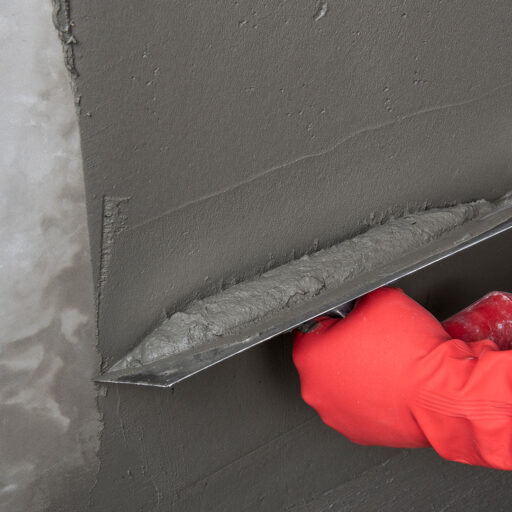
Apply the Aquaproof mixture with a brush, taking particular care to cover any irregularities evenly and fill surface pores; special attention must be paid to corners, edges, recesses and floor-to-wall junctions. If you wish to apply subsequent coats with a trowel, mix ‘Aquaproof’ with 23–25% clean water (equivalent to 5.75–6.25 litres per 25 kg bag), using the same procedure as for preparing the mixture to be applied with a brush. In all cases, the mixture prepared in this way remains workable for approximately 40 minutes under normal conditions (at 20 °C); at higher temperatures, the workable time is reduced, whilst at lower temperatures it is extended. Subsequent coats, if applied by brush, must be laid in a criss-cross pattern to the previous coat. For application by roller or wide-bristle brush, there is no need to apply the first coat by brush, and the same amount of mixing water used for brush application may be used. For spray application, there is no need to apply the first coat with a brush; as a general guide, the same mixing water ratio used for brush, roller and wide-bristle brush application may be used, but the product must first be mixed separately with water, left to stand for the correct amount of time as described above, and then poured into the feed hopper of the rendering machine. If necessary, adjust the mixing water ratio according to the type of rendering machine and nozzle used. Apply in coats, using either a trowel, brush, roller, wide-bristle brush or spray, to a thickness of up to 1 mm, taking care to apply the product using the ‘wet-on-wet’ technique; that is, apply the next coat when the previous one has set but is not yet fully hardened. Do not exceed this thickness to avoid the risk of cracking. In the event of damp or moisture seepage, apply at least 2 coats of the product. In the case of groundwater, standing water, or water under positive or negative pressure, apply at least 3 coats. The waiting time between coats may vary significantly depending on the porosity of the substrate and environmental conditions. Generally, it is sufficient to wait 4–6 hours between coats. In the event of high temperatures and/or strong winds, to prevent the mixing water from evaporating too quickly, keep the surface damp by spraying it with a fine mist of water. If necessary, the final coat can be finished with a sponge trowel, just as with a standard skim-coat mortar. If the Aquaproof is to come into contact with very soft water (0 to 10 degrees of French hardness), please consult the Technical Department. The tools used for application can be cleaned with water before the mortar hardens; thereafter, cleaning can only be carried out by mechanical removal.
Aquaproof When stored in a dry, sheltered place in its original, unopened bags, it will keep for at least 12 months.
| Color | Code | Packaging | Packaging size | Pallet | Barcode |
|---|---|---|---|---|---|
| Grey | 6360 | bag | 25kg |
50 bags
|

|
| PARAMETER AND TEST METHOD | VALUES |
| DETERMINATION ON POWDERED PRODUCT | |
| Colour | grey |
| Consistency | powder |
| Bulk density (according to EN 2811-1) | 1290 kg/m³ |
| Particle size distribution (as per EN 12192-1) | 0–0.5 mm |
| Chloride content (as per EN 1015-17) | 0.05% |
| Thermogravimetry (mass loss at 600 °C in accordance with EN 11358) | 3.2% |
| Ash content (in accordance with EN 3451-1) | 96.4% |
| ANALYSIS OF FRESH PRODUCT | |
| Mixing water | 23–25%, equivalent to 5.75–6.25 litres per 25 kg bag (by trowel) |
| Mixing water | 25–27%, equivalent to 6.25–6.75 litres per 25 kg bag (applied with a trowel, roller, brush or spray) |
| Consistency of the mixture | from plastic-spatulaable to fluid, depending on the application method |
| pH of the mixture | > 12 |
| Density of fresh mixture (according to EN 1015-6) | 1.910 kg/m³ |
| Air content (as per EN 1015-7) | 9% |
| Bleeding (as per DIN 4227/5) | <1% |
| Consistency (as per EN 1015-3) | 210 mm |
| Setting times (as per EN 196-3): initial setting | 4–5 hours |
| Setting times (according to EN 196-3): final setting | 7–8 hours |
| Workability time of the mix | approx. 40 minutes under normal conditions (at +20 °C) |
| Drying time between coats | 4 to 6 hours depending on the porosity of the substrate and environmental conditions |
| Time to full curing | 28 days |
| Application temperature | from +5 °C to +30 °C |
| TESTS ON CURED PRODUCT | |
| Operating temperature | from -20 °C to +90 °C |
| Water resistance (according to DIN 1048): 28 days at 1.5 bar positive hydrostatic pressure | withstands |
| Water resistance (per DIN 1048): maximum positive hydrostatic pressure load | 3.0 bar |
| Water resistance (per DIN 1048): maximum negative hydrostatic pressure load | 0.5 bar |
| Compressive strength after 28 days (in accordance with EN 196-1) | 28 N/mm² |
| Flexural strength after 28 days (in accordance with EN 193-1) | 6.0 N/mm² |
| Hydraulic shrinkage after 90 days (according to IBH guidelines) | 1.7 mm/m |
| Water vapour diffusion resistance coefficient – μ (in accordance with DIN 52615) | 90 |
| Coverage | from 2.0 to 6.0 kg/m² |
| Maximum achievable thicknesses | 1 mm per coat (up to 4 mm in total) |
| TESTS IN ACCORDANCE WITH EN 1504-2 | |
| Water vapour permeability (according to EN 7783) | SD = 0.19 m (thickness 2.5 mm) |
| Liquid water transmission rate (in accordance with EN 1062-3) | w = 0.03 kg/(m²·h⁰.⁵) |
| Direct tensile bond strength (in accordance with EN 1542-1) | 1.7 MPa (on dry concrete) |
| Adhesion strength by direct pull test (according to EN 1542-1) | 1.4 MPa (on damp concrete) |
Aquaproof’s coverage is approximately 1.6 kg/m² per mm of thickness. The total quantity required depends on the waterproofing requirements of the structure to be treated.
For application by brush, roller, wide-bristle brush or spray: 1–1.2 kg/m² per coat.
For trowel application: approx. 1.5 kg/m² per coat. Can be applied using an M-Tec Speedy MP pump
Minimum consumption:
Contact our team for personalized support and product guidance.