T Epoxy
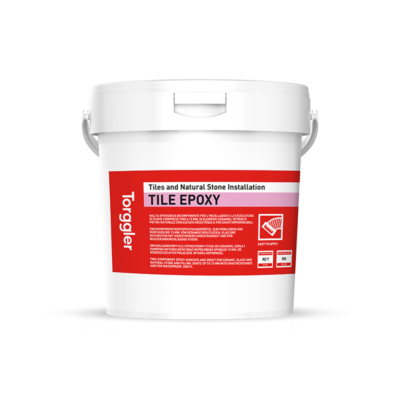
Two-component epoxy mortar, class R2 T according to EN 12004 and RG according to EN 13888, for bonding and grouting ceramic tiles, ceramic and glass mosaics, marble and natural stone to a thickness of 2 to 20 mm.
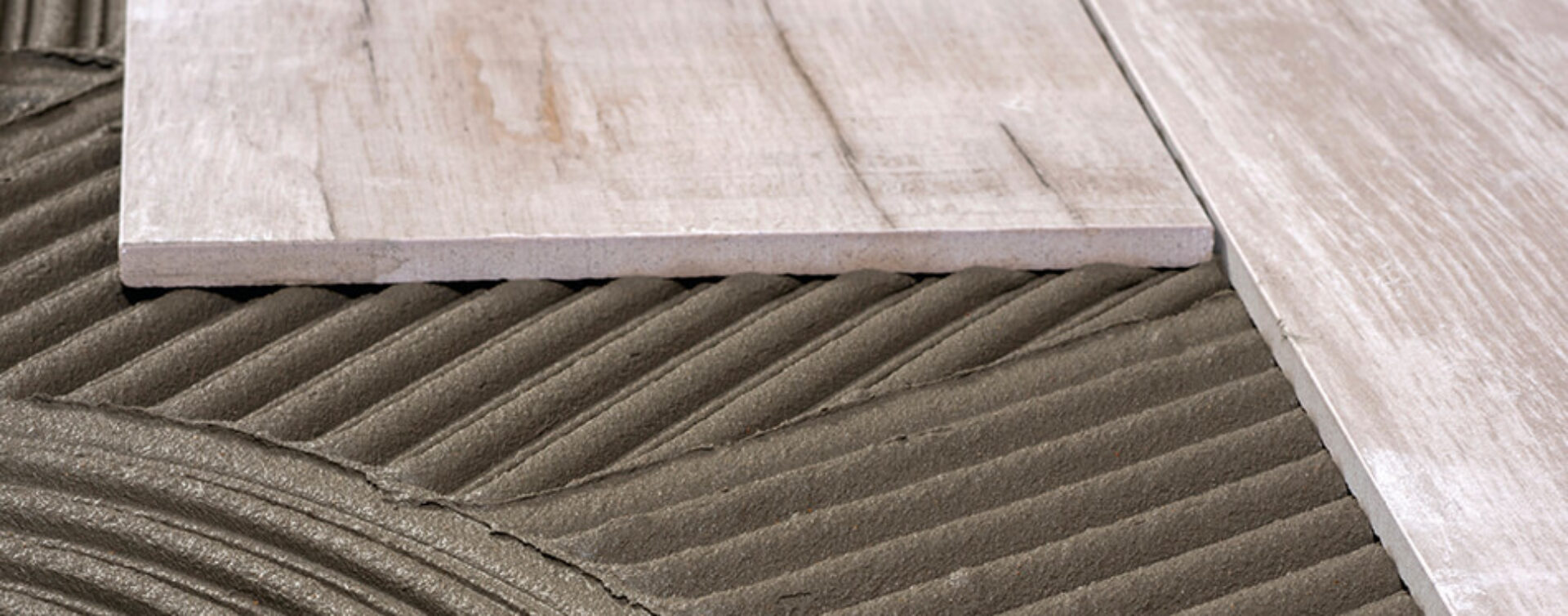
Two-component epoxy mortar, class R2 T according to EN 12004 and RG according to EN 13888, for bonding and grouting ceramic tiles, ceramic and glass mosaics, marble and natural stone to a thickness of 2 to 20 mm.
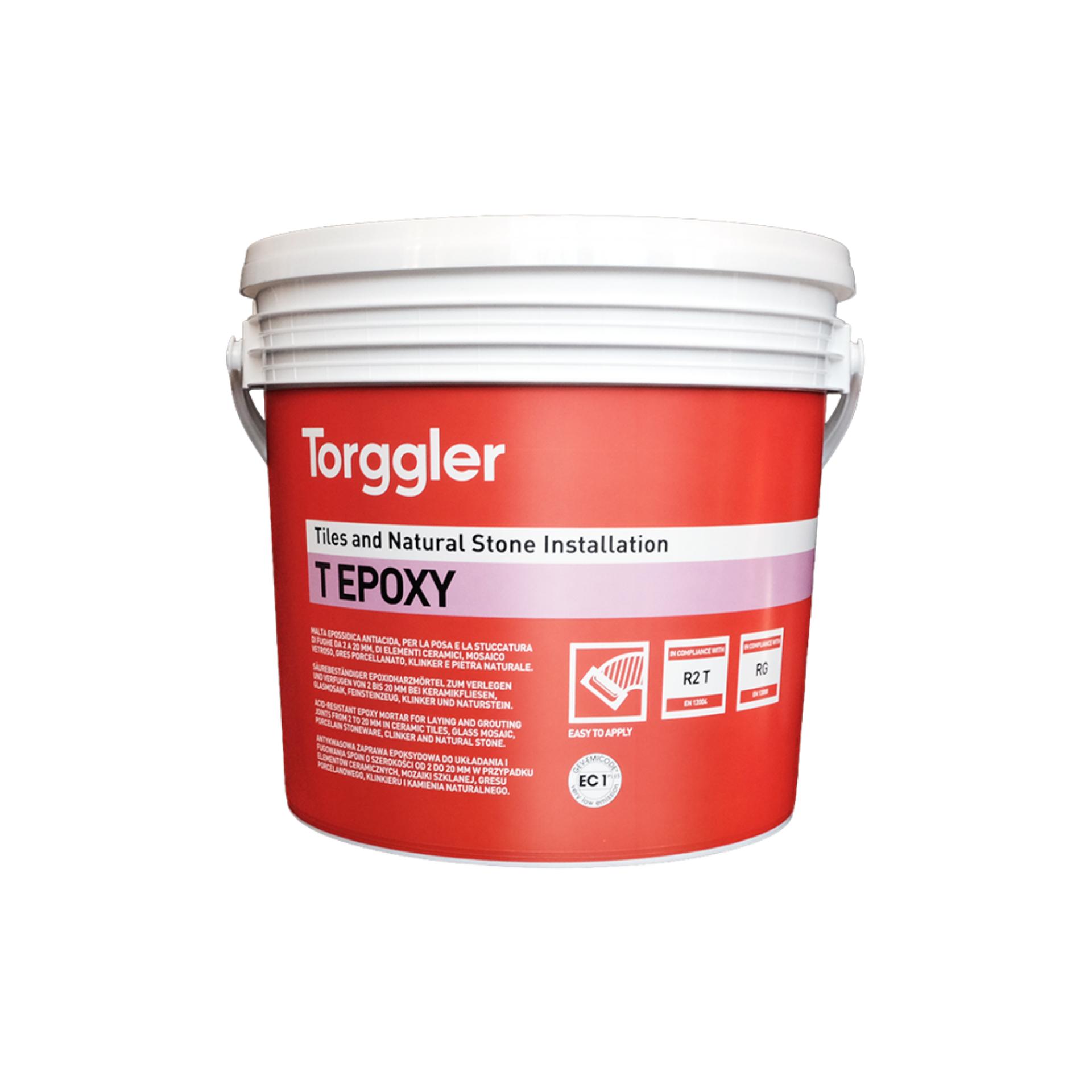


Variations
Sealing of joints in ceramic flooring and wall tiles, such as glass mosaic, porcelain stoneware, clinker, as well as marble and natural stone*. Grouting of surfaces requiring high chemical and mechanical resistance, or where a joint that is as non-absorbent as possible is desired, in residential, industrial and commercial settings, on both vertical and horizontal surfaces.
Sealing of floors subject to heavy traffic, industrial warehouses, shopping centres, etc.
Sealing of thermal water swimming pools (indoor environments). Adhesive for laying and bonding the aforementioned coverings to walls and floors where high performance is required.
Discover more
Two-component epoxy mortar, class R2 T according to EN 12004 and RG according to EN 13888, for bonding and grouting ceramic tiles, ceramic and glass mosaics, marble and natural stone to a thickness of 2 to 20 mm.
Preparation for installation
When using the product as an adhesive, ensure that the substrate – whether concrete, screed, plaster or other – is sufficiently cured and strong, clean, free from dust, general dirt, oil or grease, and not damp or wet. When used as a sealant, ensure that both the tiles and the joints are free from dust, cement, oils, grease and general dirt.
Product preparation
Pour the pre-measured Component B into the Container for Component A and mix the two components thoroughly, using a trowel to ensure all the hardener is incorporated. For perfect mixing, use an electric drill, taking care to scrape the sides of the container several times until a homogeneous mixture is obtained. Avoid partial dosing on site to prevent catalysis errors.
Application instructions
If used as an adhesive, apply the product by spreading it onto the substrate using a notched trowel, then lay the ceramic or stone tiles; or, if used as a joint filler, use a rubber squeegee, taking care to fill the joints thoroughly; then remove any excess. Once prepared, the mixture has a pot life of approx. 45 minutes (at 23°C and 50% RH); higher temperatures shorten the pot life, whilst lower temperatures extend it.
Cleaning
Proceed to clean the grouted joints using a hard or abrasive sponge, rinsing it frequently in clean water, preferably lukewarm.
Final cleaning
Once setting has begun, cleaning can be carried out using water with 10% alcohol added. Once fully hardened, only mechanical cleaning is possible.
24 months in the original packaging if stored in a cool, dry place at temperatures between +12 °C and +25 °C.
Do not use T Epoxy:
| Color | Code | Components | Packaging | Packaging size | Pallet | Barcode |
|---|---|---|---|---|---|---|
| Crocus | 8504 | 2 components | bucket | 5kg |
80 buckets
|

|
| Red | 8491 | 2 components | bucket | 5kg |
80 buckets
|

|
| White | 8490 | 2 components | bucket | 5kg |
80 buckets
|

|
| Yellow | 8492 * | 2 components | bucket | 5kg |
80 buckets
|

|
| Black | 8493 | 2 components | bucket | 5kg |
80 buckets
|

|
Sealing of joints in ceramic flooring and wall tiles, such as glass mosaic, porcelain stoneware, clinker, as well as marble and natural stone*. Grouting of surfaces requiring high chemical and mechanical resistance, or where a joint that is as non-absorbent as possible is desired, in residential, industrial and commercial settings, on both vertical and horizontal surfaces.
Sealing of floors subject to heavy traffic, industrial warehouses, shopping centres, etc.
Sealing of thermal water swimming pools (indoor environments). Adhesive for laying and bonding the aforementioned coverings to walls and floors where high performance is required.
*See warnings
| Name | Concentration % | Prolonged contact at 20 °C | Occasional contact at 20 °C |
| Agent type: acids | |||
| Acetic | 2.5% | – | +/- |
| Acetic | 5% | – | – |
| Acetic | 10% | – | – |
| Hydrochloric | 37% | +/- | + |
| Chromic | 20% | – | – |
| Citric | 10% | – | – |
| Formic | 2.5% | – | +/- |
| Formic | 10% | – | – |
| Lactic | 2.5% | – | +/- |
| Lactic | 5% | – | – |
| Lactic | 10% | – | – |
| Nitrate | 25% | +/- | + |
| Nitrate | 50% | – | – |
| Oleic | – | – | |
| Phosphoric | 50% | – | +/- |
| Phosphoric | 75% | – | – |
| Sulphuric | 1.5% | + | + |
| Sulphuric | 50% | +/- | + |
| Sulphuric | 98% | – | – |
| Tannic | 10% | +/- | + |
| Tartaric | 10% | +/- | + |
| Oxalic | 10% | + | + |
| Type of agent: alkalis and saturated solutions | |||
| Ammonia | 25% | + | + |
| Caustic soda | 50% | + | + |
| Caustic potash | 50% | – | +/- |
| Sodium hypochlorite: Active chlorine | 6.5 g/l | +/- | + |
| Sodium hypochlorite: Active chlorine | 162 g/l | – | – |
| Agent type: saturated solutions | |||
| Sodium hyposulphite | + | + | |
| Sodium chloride | + | + | |
| Calcium chloride | + | + | |
| Iron chloride | + | + | |
| Aluminium sulphate | + | + | |
| Sugar | + | + | |
| Hydrogen peroxide | 1% | +/- | + |
| Hydrogen peroxide | 10% | +/- | + |
| Sodium bisulphite | +/- | + | |
| Agent type: oils and fuels | |||
| Petrol | + | + | |
| Petroleum | + | + | |
| Diesel | + | + | |
| Olive oil | + | + | |
| Agent type: solvents | |||
| Ethyl alcohol | – | +/- | |
| Acetone | – | – | |
| Ethylene glycol | + | + | |
| Glycerine | + | + | |
| Perchloroethylene | – | – | |
| Trichloroethane | – | – | |
| Trichloroethylene | – | – | |
| Methylene chloride | – | – | |
| Toluene | – | – | |
| Benzene | – | – | |
| Xylene | – | – | |
Key: + = excellent resistance, +/- = fair resistance, – = poor resistance
| PARAMETER | VALUE |
| Mixing ratio | Comp. A : Comp. B = 94 : 6 |
| Component A | |
| Consistency | paste-like |
| Density | 1.65 kg/l |
| Viscosity at 25 °C | Over 1,000,000 mPa*s |
| Dry residue | 100% |
| Component B | |
| Consistency | thick liquid |
| Density | 0.95 kg/l |
| Viscosity at 25°C | 300–1000 mPa·s |
| Dry residue | 100% |
| PARAMETER | REQUIREMENTS | VALUE |
| Determined on fresh mix | ||
| Application temperature | from +12 °C to +25 °C | |
| Pot life (at 23 °C and 50 % RH) | approx. 45 minutes | |
| Testing on cured product |
||
| AS AN ADHESIVE IN ACCORDANCE WITH EN 12004 | ||
| Initial adhesion (according to EN 12004-2 / 8.5.3.2) | > 2 N/mm² | 5.6 N/mm² |
| Adhesion after immersion in water (according to EN 12004-2 / 8.5.3.3) | > 2 N/mm² | 7.4 N/mm² |
| Adhesion after thermal shock (according to EN 12004-2 / 8.5.3.4) | > 2 N/mm² | 2.5 N/mm² |
| Open time (according to EN 1346) | > 20 minutes | 30 minutes |
| Limited slip value (according to EN 1308) | < 0.5 mm | < 0.2 mm |
| AS A FILLER IN ACCORDANCE WITH EN 13888 | ||
| Abrasion resistance (according to EN 12808-2) | < 250 mm³ | < 250 mm³ |
| Flexural strength (according to EN 12808-3) | 30 N/mm² | > 30 N/mm² |
| Compressive strength (according to EN 12808-3) | > 45 N/mm² | > 45 N/mm² |
| Capillary absorption after 240 minutes (according to EN 12808-5) | < 0.1 g | < 0.1 g |
| Shrinkage (according to EN 12808-4) | < 1.5 mm/m | < 1.5 mm/m |
| Walkability (at 25 °C) | approx. 24 hours | |
| Full cure (at 20 °C) | approx. 7 days | |
| Operating temperature | -20 °C to +100 °C* | |
| Consumption as an adhesive | 2.0 to 4.0 kg/m² | |
| Consumption as joint filler | 0.1 to 5.1 kg/m² (see table) | |
*The maximum operating temperature is intended for occasional use and not continuous operation
Coverage may vary depending on the application, the type and size of the tiles, the evenness of the substrate and the width of the joints. As a guide, approx. 2.0–4.0 kg/m² when used as an adhesive. When used for grouting, product consumption typically ranges from approx. 0.1 to approx. 5.1 kg/m² (see table).
| TILE SIZE | JOINT WIDTH (in mm) | ||
| Dimensions (in mm) | 2 | 5 | 8 |
| 20 x 20 x 4 | 1.2 | 3.2 | 5.1 |
| 50 x 50 x 4 | 0.5 | 1.3 | 2.0 |
| 100 x 100 x 6 | 0.4 | 1.0 | 1.5 |
| 120 x 240 x 12 | 0.5 | 1.2 | 1.9 |
| 200 x 200 x 10 | 0.3 | 0.8 | 1.3 |
| 300 x 300 x 10 | 0.2 | 0.5 | 0.8 |
| 400 x 400 x 10 | 0.2 | 0.4 | 0.7 |
| 150 x 900 x 10 | 0.3 | 0.6 | 1.0 |
| 600 x 1200 x 10 | 0.1 | 0.2 | 0.3 |
In the table, values are expressed in kg/m².
Formula for calculating consumption T Epoxy
[(A+B)/(AxB)]xCxDx1.6 = consumption …….. kg/m²
Key: A = tile length, B = tile width, C = tile thickness, D = joint width
Contact our team for personalized support and product guidance.